Spinal Anesthesia for Cesarean Delivery in Selected Patients with Severe Pulmonary Hypertension: A Case Report
DOI:
https://doi.org/10.55497/majanestcricar.v44i3.508Keywords:
Atrial septal defect, cesarean section, pregnancy, pulmonary hypertension, spinal anesthesiaAbstract
Introduction: Pregnancy in patients with pulmonary hypertension carries a very high maternal risk and is classified as modified World Health Organization class IV, particularly when associated with congenital heart disease.
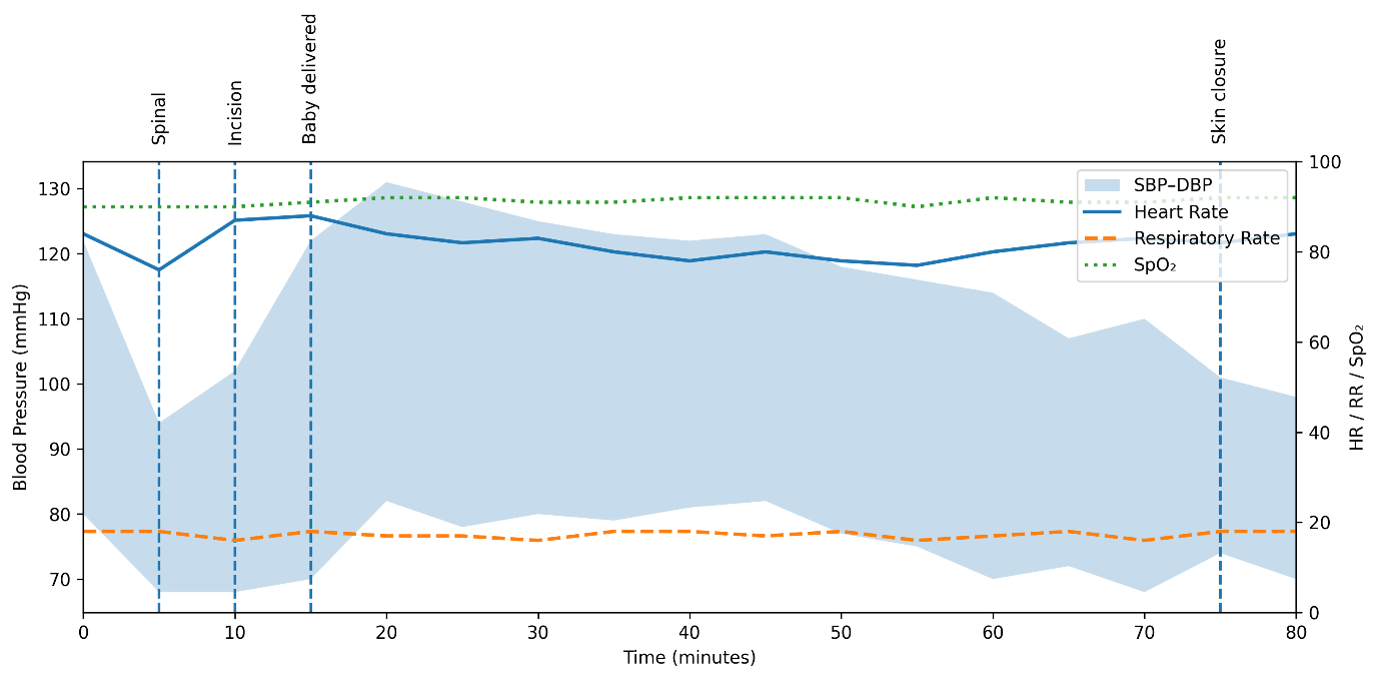
Case Description: We report a 28-year-old woman at 35 weeks of gestation with a large secundum atrial septal defect, severe tricuspid regurgitation, and significant pulmonary hypertension who underwent elective cesarean delivery. She presented in a relatively stable clinical condition without signs of decompensated right heart failure, but with limited functional capacity and low oxygen saturation on room air. Echocardiography demonstrated right-sided chamber dilatation, a predominantly left-to-right shunt with intermittent bidirectional flow, a D-shaped left ventricle, and preserved left ventricular systolic function. Delivery was planned in a tertiary referral center with intensive care support and multidisciplinary management. Single-shot spinal anesthesia with hyperbaric prilocaine was performed under invasive arterial monitoring, with a restrictive fluid strategy, careful vasopressor titration, and careful avoidance of factors that could increase pulmonary vascular resistance or c..ompromise hemodynamic stability. Intraoperatively, hemodynamic status remained within acceptable limits without severe hypotension, arrhythmia, or signs of acute right ventricular failure. A live neonate was delivered with good early outcome, and the patient remained stable during postoperative care in the maternal intensive care unit until discharge on postoperative day 3.
Conclusion: This case suggests that spinal anesthesia may be feasible in carefully selected patients with severe pulmonary hypertension when supported by meticulous hemodynamic control, invasive monitoring, and multidisciplinary perioperative care
Downloads
References
1. Humbert M, Kovacs G, Hoeper MM, Badagliacca R, Berger RMF, Brida M, et al. 2022 ESC/ERS Guidelines for the diagnosis and treatment of pulmonary hypertension. Eur Heart J. 2022;43(38):3618-731. doi:10.1093/eurheartj/ehac237
2. Wander G, Montanaro C, Dixit P, Dob D, Johnson MR, Patel RR. Pregnancy and pulmonary artery hypertension: Management challenges. Int J Cardiol Congenit Heart Dis. 2025;19:100566. doi:10.1016/j.ijcchd.2025.100566.
3. McNeil A, Chen J, Meng ML. Pulmonary hypertension in pregnancy-the Anesthesiologist’s perspective. Int J Cardiol Congenit Heart Dis. 2021;5(Suppl 1):100234. doi:10.1016/j.ijcchd.2021.100234
4. Tosun Söner H, Bulut E, Uzundere O, Söner S, Baysal Yıldırım Z, Kuyumcu M. Management of anesthesia in pregnant women with pulmonary hypertension. Eur Rev Med Pharmacol Sci. 2023;27(23):11315-22. doi:10.26355/eurrev_202312_34570
5. Zhang Q, Zhu F, Shi G, Hu C, Zhang W, Huang P, et al. Maternal outcomes among pregnant women with congenital heart disease-associated pulmonary hypertension. Circulation. 2023;147(7):549-61. doi:10.1161/CIRCULATIONAHA.122.057987
6. Regitz-Zagrosek V, Roos-Hesselink JW, Bauersachs J, Blomström-Lundqvist C, Cífková R, De Bonis M, et al. 2018 ESC Guidelines for the management of cardiovascular diseases during pregnancy. Eur Heart J. 2018;39(34):3165-241. doi:10.1093/eurheartj/ehy340
7. Meng ML, Arendt KW, Banayan JM, Bradley EA, Vaught AJ, Hameed AB, et al. Anesthetic care of the pregnant patient with cardiovascular disease: A scientific statement from the American Heart Association. Circulation. 2023;147:E657-73. doi:10.1161/CIR.0000000000001121
8. Apfelbaum JL, Hawkins JL, Agarkar M, Bucklin BA, Connis RT, Gambling DR, et al. Practice guidelines for obstetric anesthesia: An updated report by the American Society of Anesthesiologists Task Force on Obstetric Anesthesia and the Society for Obstetric Anesthesia and Perinatology. Anesthesiology. 2016;124(2):270-300. doi:10.1097/ALN.0000000000000935
9. Chapron K, Sleth JC, Capdevila X, Bringuier S, Dadure C. Hyperbaric prilocaine vs. hyperbaric bupivacaine for spinal anaesthesia in women undergoing elective caesarean section: A comparative randomised double-blind study. Anaesthesia. 2021;76(6):777-84. doi:10.1111/anae.15342
10. Wundiawan KF, Panji PAS, Suranadi W, Widnyana MG, Dewi DAMS, Hartawan IGAGU, et al. Comparison of hemodynamic profiles and onset and offset of motor and sensory blockade between 2% hyperbaric prilocaine and 0.5% hyperbaric bupivacaine for spinal anesthesia in scheduled cesarean sections: A double-blind, randomized clinical trial. Bali J Anesthesiol. 2025;9(1):35-41. doi:10.4103/bjoa.bjoa_17_25
11. Song K, Blankenship RB, Dua A, Derian A. Local Anesthetic Toxicity. 2026 Sep 14. In: StatPearls [Internet]. Treasure Island (FL): StatPearls Publishing; 2026.
12. Page RL 2nd, O’Bryant CL, Cheng D, Dow TJ, Ky B, Stein CM, et al. Drugs that may cause or exacerbate heart failure. Circulation. 2016;134(6):e32-69. doi:10.1161/CIR.0000000000000426
Downloads
Published
Issue
Section
License
Copyright (c) 2026 Putu Ari Kamanjaya HS, Adinda Putra Pradhana, Tjahya Aryasa EM, I Gusti Agung G Utara Hartawan

This work is licensed under a Creative Commons Attribution-NonCommercial 4.0 International License.